


News


Germanium Balls for Thermal Camera Modules and IR Optical Assemblies
Thermal imaging systems and infrared optical assemblies demand materials that combine high refractive performance, dimensional stability, and predictable physical properties. Among specialty semiconductor materials, germanium balls occupy a distinct position in IR engineering and precision component design. Their high refractive index, broad infrared transmission range, and substantial density make them suitable for applications where conventional metallic or ceramic spheres are inadequate. In this blog post, Changzhou Eurasian, as high precision specialty metal balls manufacturer, will share the advantages of custom germanium balls for thermal camera modules and IR optical assemblies.
Material Characteristics of Germanium Spheres in IR Engineering
Germanium (Ge) is a high-density semiconductor material with a density of approximately 5.33 g/cc and a melting point near 936°C. For infrared optical systems, its most notable characteristics include:
High refractive index, commonly referenced around 4.0026 at 11 μm
Optical transmission range typically cited from 1.8 to 23 μm
Strong performance in the 8–14 μm thermal imaging band
These properties position germanium spheres as functional optical or structural elements in IR modules. Unlike steel balls that primarily provide mechanical support, germanium balls may contribute to optical alignment, mass balancing, or specialized IR interactions within an assembly.
Because thermal camera modules operate in demanding temperature environments and rely on precise IR signal transmission, material selection must be based on optical-grade germanium specifications rather than general industrial grades.
Why Custom Germanium Balls Matter in Thermal Camera Modules
Modern thermal camera modules integrate sensors, optical lenses, substrates, filters, and mechanical positioning components in compact enclosures. Within these systems, custom germanium balls can serve several roles:
Precision reference elements in optical calibration setups
Mass elements for inertial or balancing mechanisms
Specialty IR-compatible components within optical paths
R&D test geometry for evaluating IR transmission behavior
The high refractive index of germanium allows optical engineers to design systems with compact geometries. In certain module architectures, spherical germanium components support experimental optical configurations or serve as calibration references during development phases.
Customization is essential. Diameter, tolerance, surface finish, and material certification must align with the performance envelope of the thermal imaging system. Off-the-shelf spheres rarely satisfy the dimensional or inspection standards required for IR assemblies.
Precision Tolerances and Surface Finishing for Optical Integration
In IR optical assemblies, surface condition directly influences system performance. A germanium sphere may be supplied as:
Ground finish for mechanical integration
Precision polished finish for optical use
As-machined for non-optical structural roles
Surface irregularities can affect scattering behavior or introduce unwanted IR interaction. Therefore, specifying surface roughness, sphericity, and diameter tolerance is not merely a procurement detail but a design requirement.
For example, in thermal imaging component ecosystems, micron-level dimensional stability may be required to maintain alignment accuracy. When specifying custom germanium balls, engineers typically define:
Diameter range (custom sizes on request)
Precision grade or allowable deviation
Surface condition and inspection criteria
Material certification documentation
Clear technical communication during germanium balls manufacturing significantly reduces downstream assembly risks.
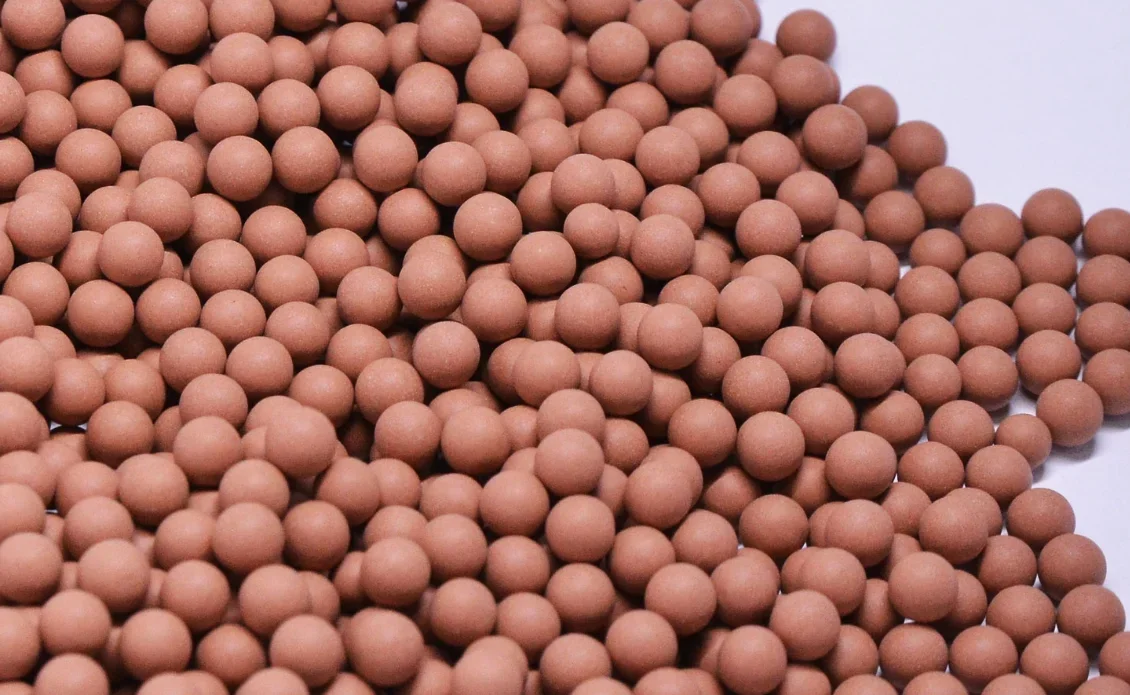
Germanium Ball Manufacturing Process Considerations
The production of high-precision germanium spheres involves several controlled steps, including raw material verification, machining, shaping, finishing, and inspection. Since germanium is a brittle semiconductor material, its machining parameters differ from metallic sphere production.
Critical process aspects include:
Controlled shaping to maintain sphericity
Avoidance of micro-cracks during machining
Surface polishing techniques suitable for optical-grade material
Non-destructive inspection for internal defects
Experienced germanium balls manufacturing operations must understand both semiconductor material behavior and precision sphere geometry control. Improper processing may introduce subsurface damage, which can affect performance in sensitive IR systems.
At Eurasian, production workflows emphasize repeatability and documentation to meet semiconductor R&D and infrared optics procurement standards.
Integration into Infrared Optical Assemblies
Infrared optical assemblies often consist of lenses, windows, filters, and structural housings designed for specific wavelength ranges. Germanium is widely referenced as a substrate material in IR optics supply chains, particularly within the 8–14 μm band used in thermal imaging.
When integrating custom germanium balls into these assemblies, engineers evaluate:
Compatibility with adjacent optical materials
Thermal expansion behavior within the module
Mechanical stress distribution
Environmental stability in operational temperature ranges
Germanium’s density supports compact designs requiring defined mass or inertia. This characteristic may be useful in miniaturized systems where mechanical behavior influences optical alignment or sensor stabilization.
Design teams must also consider how the sphere interacts with coatings, adhesives, or mounting structures. Even though the melting point of germanium is around 936°C, operating environments are far below this threshold; however, localized stress concentrations remain a factor in long-term reliability.
Technical Specifications Commonly Referenced by Buyers
For procurement and technical evaluation, the following specifications are frequently included in documentation:
Product name: Germanium Ball / Germanium Sphere / Ge Ball
Material: Germanium (Ge)
Density: ~5.33 g/cc
Melting point: ~936°C
Optical transmission range: 1.8 to 23 μm
Refractive index: ~4.0026 at 11 μm
Size range: Custom diameter
Tolerance: Custom precision grades
Surface finish: Polished / ground / as-machined
Documentation: Material certificate and inspection report
Providing complete specification transparency supports purchasing decisions and ensures alignment between R&D expectations and production capabilities.
Procurement Strategy for Custom Germanium Components
When evaluating germanium balls for sale in the global market, buyers should move beyond basic material claims and focus on process capability and quality assurance.
Key evaluation criteria include:
Ability to supply custom diameters and tolerances
Proven experience in semiconductor-grade material handling
Inspection reporting aligned with international standards
Consistent batch traceability
Thermal imaging manufacturers often require prototype quantities followed by scaled production. Selecting a supplier capable of stable scaling reduces supply chain variability.
In addition, long-tail search terms such as “optical grade germanium spheres for thermal camera modules” or “precision Ge balls for infrared assemblies” reflect the increasing specialization of demand in overseas markets. Suppliers who understand these technical nuances are better positioned to support complex projects.
Supporting Semiconductor and Materials R&D
Beyond direct integration into IR camera modules, germanium spheres are used in semiconductor research environments. Elemental Ge in spherical form can support materials testing, experimental optical setups, or calibration studies.
Researchers may require:
Small-diameter precision spheres
Certified purity levels
Documented physical property references
Controlled surface finishes
Providing consistent material data strengthens reproducibility in laboratory environments. For institutions developing next-generation IR technologies, access to reliable custom germanium balls is a foundational requirement.
Frequently Asked Questions About Custom Germanium Balls
1. What are custom germanium balls primarily used for?
Custom germanium balls are typically used in infrared optical systems, thermal camera modules, semiconductor R&D, and precision assemblies where high refractive index and IR transmission are required. They may serve optical, calibration, or structural functions depending on system design.
2. What size range can be supplied?
Diameter is generally customizable based on project requirements. Buyers can specify tolerance grades, sphericity limits, and surface finish depending on whether the sphere will be used in optical or mechanical applications.
3. Are material certificates available?
Yes. Material certificates and inspection reports are typically available upon request. These documents confirm density, material composition, and relevant physical properties required for technical procurement.
4. How does germanium compare with steel or ceramic balls in IR systems?
Unlike steel or ceramic spheres, germanium provides significant infrared transmission and a high refractive index. This makes it suitable for IR optical assemblies where metallic materials would block or interfere with infrared radiation.
5. What should buyers evaluate when selecting a supplier?
Buyers should assess production capability, experience in germanium balls manufacturing, tolerance control, surface finishing quality, and traceable inspection processes. Stable supply capacity and technical communication are critical for thermal imaging and semiconductor projects.


