


News

Rise of Aluminum Balls in Manufacturing: The Lightweight Revolution Transforming Industries
The global shift toward lightweighting and energy efficiency is driving unprecedented demand for aluminum balls across manufacturing sectors. From aerospace components to electric vehicle assemblies, manufacturers are increasingly replacing traditional chrome steel balls with aluminum alternatives to achieve significant weight reduction while maintaining functional performance in specific load-bearing scenarios.
This analysis examines the technical characteristics, application guidelines, and real-world performance data from our manufacturing experience with aluminum sphere production.
Why Aluminum Balls Are Gaining Industrial Adoption
Manufacturers across multiple sectors are evaluating aluminum spheres for applications where traditional steel solutions face limitations in corrosion environments, weight-sensitive assemblies, or non-magnetic requirements.
1. Aerospace & Defense Lightweighting Requirements
Aircraft manufacturers prioritize weight reduction in non-primary load-bearing components. Material substitution from steel to aluminum in actuator assemblies and control mechanisms can achieve measurable fuel efficiency improvements over aircraft operational lifecycles.
Solid aluminum balls manufactured from 6061-T6 alloy (per ASTM B211) offer theoretical density of 2.70 g/cm3 versus GCr15 bearing steel's 7.85 g/cm3 (per material datasheets).
2. Electric Vehicle Thermal Management Components
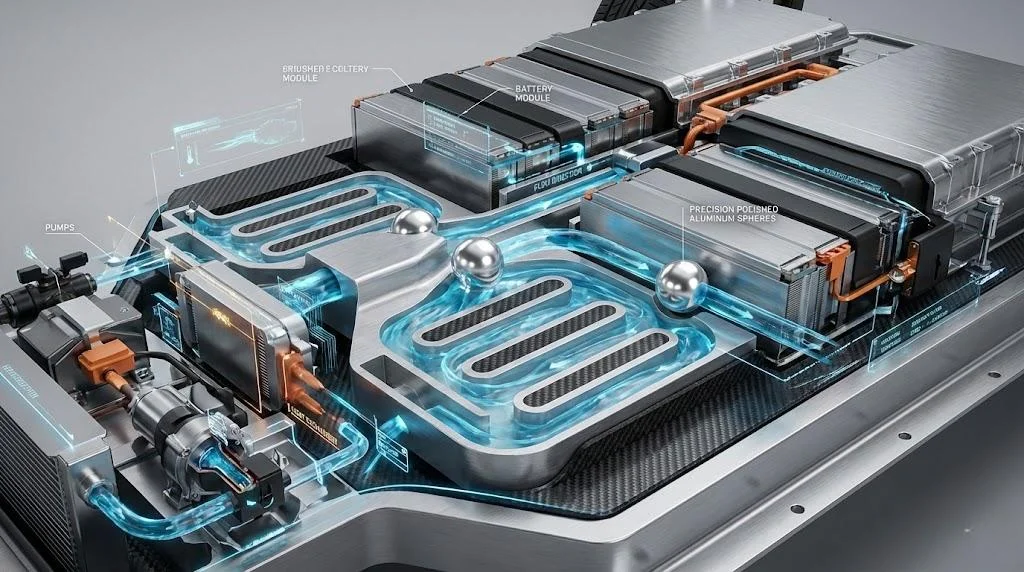
EV manufacturers require non-magnetic, thermally conductive materials for battery cooling systems and sensor housings where ferromagnetic components would cause interference.
Aluminium balls provide thermal conductivity of approximately 167 W/m·K at 25°C (6061-T6, per ASM Handbook), compared to AISI 304 stainless steel's 16.2 W/m·K or GCr15 bearing steel's 46 W/m·K, enabling more effective heat transfer in valve assemblies and flow control devices.
3. Medical Device Material Requirements
Medical equipment manufacturers select materials based on magnetic properties, corrosion resistance in sterilization environments, and regulatory documentation availability.
Aluminum alloys offer:
Non-ferromagnetic properties (essential for MRI-compatible instruments)
Resistance to autoclave sterilization cycles (121°C, saturated steam)
Material traceability documentation per ISO 13485 requirements
When specified for medical applications, material selection must be validated by the device manufacturer according to applicable FDA guidance (e.g., biocompatibility testing per ISO 10993 series) and regional regulatory frameworks.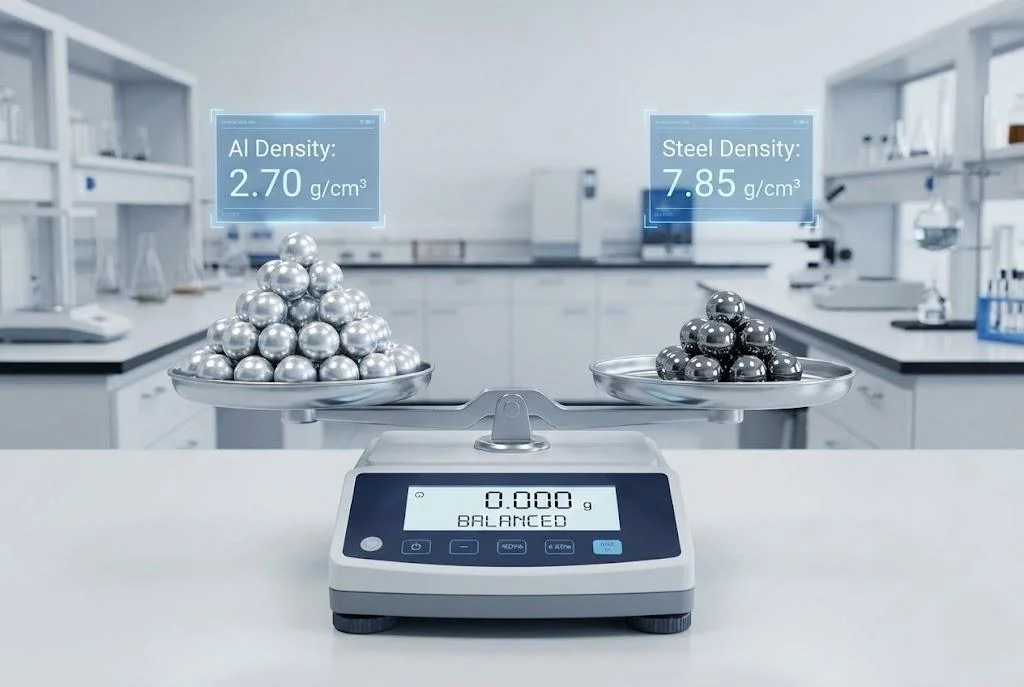
Technical Comparison: Aluminum Balls vs. Steel Balls
| Performance Parameter | Aluminum 6061-T6 | GCr15 Bearing Steel | Application Notes |
|---|---|---|---|
| Density (g/cm3) | 2.70 (ASTM B211) | 7.85 (material datasheet) | 65.6% weight reduction |
| Hardness | HRB 60-95 | HRC 60-66 | Steel superior for high-load applications |
| Corrosion Resistance | Passive Al?O? layer forms naturally | Requires protective coating | Aluminum excels in marine/chemical environments |
| Thermal Conductivity | ~167 W/m·K @ 25°C | ~46 W/m·K @ 25°C | Aluminum 3.6x higher heat transfer |
| Magnetic Properties | Non-magnetic | Ferromagnetic | Critical for electronics/medical devices |
| Machinability | Excellent (soft alloy) | Moderate (hardened steel) | Aluminum easier to drill/tap |
| Material Cost | Higher per kg | Lower per kg | Total cost depends on application lifecycle |
| Maximum Service Temp | ~150°C (continuous) | ~200°C+ (depends on heat treatment) | Aluminum limited by alloy softening |
Critical Application Guidelines
Aluminum Balls Are Suitable For:
Operating temperatures: -50°C to +150°C (continuous service for 6061-T6)
Light to moderate loads: Typical applications involve <500 N compressive force
Corrosive environments (saltwater, weak acids, alkaline solutions)
Weight-critical assemblies where mass reduction justifies higher material cost
Non-magnetic requirements (electronics assembly, MRI equipment)
Steel Balls Remain Necessary For:
High-load bearing steel balls : Applications requiring >2000 N load capacity
Abrasive grinding media (impact resistance, no spalling)
Applications requiring surface hardness >HRC 58
High-volume commodity applications where cost per unit is the primary decision factor
Key Manufacturing Sectors Adopting Aluminum Balls
Aerospace Components
Landing gear actuator assemblies: Hollow aluminum balls reduce actuator weight by 18-22 kg per aircraft
Control surface bearings: Anodized aluminum spheres for sale withstand -55°C stratospheric temperatures
Satellite deployment mechanisms: Non-magnetic properties prevent interference with onboard sensors
Automotive Innovations
Electric power steering systems: Aluminum valve components reduce actuator mass in weight-sensitive EV designs
Adaptive suspension components: Non-magnetic aluminum spheres prevent sensor interference in electronically controlled dampers
Turbocharger wastegate valves: 7075-T6 aluminum alloy resists thermal cycling in exhaust gas environments (verify with OEM specifications)
Industrial Automation
Pneumatic valve assemblies: Hollow aluminium balls reduce system inertia for faster actuation response
Conveyor transfer systems: Anodized finishes provide improved corrosion resistance (tested per ASTM B117 salt spray exposure)
Robotics end-effectors: Lower mass enables faster acceleration/deceleration in pick-and-place cycles
Medical & Laboratory Equipment
MRI-compatible surgical tools: Non-ferrous construction eliminates magnetic field interference and artifact generation
Centrifuge balancing components: Precision-machined hollow aluminium sphere assemblies
Pharmaceutical processing equipment: Aluminum alloys used in regulated applications require material traceability documentation and appropriate surface finishing to meet equipment manufacturer specifications
Surface Treatment Options for Enhanced Performance
Anodizing (Type II & Type III)
Type II anodizing (sulfuric acid): Typical coating thickness 10-25 μm, provides corrosion protection and dye receptivity
Type III hardcoat anodizing: Coating thickness 25-75 μm (depending on alloy and process parameters), surface hardness can reach HV 300-500 (equivalent to approximately HRC 30-50)
Available colors: Clear, black, gold, blue (for component identification)
Nickel-PTFE Composite Coating
Combines electroless nickel plating with PTFE particle co-deposition
Typical coating thickness: 10-25 μm with self-lubricating properties
Reduces friction coefficient compared to bare aluminum (specific values depend on application conditions and test methodology)
Extends wear life in sliding contact applications
Surface Modification Processes
Plasma nitriding/nitrocarburizing: Can form surface-modified layer on aluminum alloys (typically several microns depth), improving wear resistance while maintaining dimensional stability
Chemical conversion coating (chromate/non-chromate): Provides corrosion protection and paint adhesion primer
Process selection depends on end-use requirements, regulatory constraints, and cost considerations
Quality Standards & Manufacturing Precision
At Changzhou Eurasian Steel Ball Co., Ltd., our aluminum spheres production adheres to:
Precision Grade Capabilities
G25-G100: Standard industrial applications
G10-G16: Precision instrument assemblies
Custom tolerances: ±0.005 mm for OEM specifications
Material Certifications
ASTM B211: Aluminum alloy standards
AMS 4027: Aerospace material specification (6061-T6)
ISO 2768-m: General tolerance compliance
RoHS/REACH: Environmental compliance verified
In-House Testing Protocol
Our ISO 22716-certified quality laboratory performs:
Roundness measurement: Talyrond precision testing (±0.5 μm resolution)
Hardness verification: Rockwell B-scale testing per ASTM E18
Dimensional inspection: CMM verification for batch consistency
Corrosion testing: 1000-hour salt spray per ASTM B117
Cost Considerations for Material Selection
Aluminum balls typically have higher material cost per kilogram compared to carbon steel, but procurement decisions should evaluate total application requirements:
Cost Factors to Consider
Material Cost Differential:
Raw material price varies significantly based on alloy grade, quantity, and market conditions
Precision machining and surface treatment add to unit cost
Volume discounts and long-term supply agreements affect pricing
Application-Specific Value Drivers
Corrosion resistance: Reduced need for protective coatings or frequent replacement in harsh environments
Weight reduction: Potential system-level benefits in aerospace and automotive applications (requires engineering analysis specific to each application)
Thermal management: Enhanced heat transfer capability may reduce cooling system complexity
Processing advantages: Easier machining can reduce manufacturing cycle time
Supply Chain Considerations for Procurement Managers
Lead Time Comparison
Standard steel balls for sale : 2-4 weeks
Custom aluminum balls: 4-8 weeks (includes surface treatment)
Hollow aluminum balls for sale : 6-10 weeks (complex machining)
Minimum Order Quantities
Catalog sizes (6mm-50mm): 500 pieces minimum
Custom diameters: 2,000 pieces minimum (tooling amortization)
Prototype/sampling: 50-100 pieces available for testing
Quality Documentation Package
Eurasian Steel Ball provides comprehensive traceability documentation:
Material certificates: Mill Test Reports traceable to heat/lot number (per EN 10204 3.1 standard)
Dimensional inspection reports: CMM measurement data for critical dimensions, roundness deviation, surface finish
PPAP documentation: Production Part Approval Process Level 3 for automotive tier suppliers (when required by customer)
Material composition verification: Spectroscopy test results confirming alloy compliance with ASTM B211 or customer specifications
Surface treatment certificates: Anodizing thickness, hardness, and adhesion test results per applicable standards
Sustainability & Material Lifecycle Considerations
Recyclability Profile
Aluminum alloys demonstrate excellent recyclability characteristics:
Post-consumer aluminum recycling: Well-established infrastructure in most industrial regions
Scrap retention value: Aluminum maintains significant material value at end-of-life (actual scrap prices fluctuate with commodity markets)
Remelting energy requirements: Secondary aluminum production requires substantially less energy than primary production from bauxite ore
Environmental Factors in Material Selection
When evaluating aluminum vs. steel for a specific application, consider:
Production energy intensity: Primary aluminum production is energy-intensive; secondary (recycled) aluminum reduces this impact significantly
Use-phase benefits: Weight reduction in transportation applications can yield fuel/energy savings (quantifiable benefits depend on vehicle type, duty cycle, and operational lifespan)
End-of-life recovery: Both aluminum and steel have established recycling streams; actual recovery rates depend on regional infrastructure and component design for disassembly
Future Trends in Aluminum Sphere Manufacturing
Advanced Alloy Development
Research continues in aluminum alloy systems targeting:
Improved high-temperature performance: Alloys with enhanced creep resistance for applications approaching 200°C service temperatures
Surface-hardened variants: Combining aluminum's base properties with engineered surface layers
Hybrid material systems: Hollow aluminum spheres with engineered core materials for specialized load/thermal requirements
Manufacturing Process Evolution
Emerging production technologies include:
Additive manufacturing (metal 3D printing): Enables complex internal geometries and lattice structures not achievable through conventional machining
Near-net-shape forming: Advanced forging and casting techniques to reduce material waste and machining time
Integrated quality verification: In-process measurement systems for real-time dimensional control
FAQ: Aluminum Balls in Manufacturing
What are the main advantages of aluminum balls over steel balls?
Aluminum balls offer 65.6% lower density (2.70 g/cm3 vs 7.85 g/cm3 for bearing steel), natural corrosion resistance through passive oxide layer formation, non-magnetic properties essential for electronic and medical equipment, and significantly higher thermal conductivity (approximately 167 W/m·K for 6061-T6 versus 46 W/m·K for GCr15 bearing steel at room temperature). These properties make aluminum suitable for weight-sensitive, corrosive, or non-magnetic applications.
Can aluminum balls replace steel balls in high-load bearing applications?
Aluminum balls are generally suitable for light to moderate loads (typically <500 N) and applications not requiring extreme surface hardness. For high-load bearing applications exceeding 2000 N compressive force or requiring surface hardness above HRC 58, precision steel balls remain the appropriate material choice due to superior mechanical strength and wear resistance.
What precision grades are available for aluminum balls?
Manufacturing precision ranges from G100 (general industrial applications) to G10 (high-precision requirements). Eurasian Steel Ball machines aluminum spheres with dimensional tolerances verified through coordinate measuring machine (CMM) and Talyrond roundness measurement systems. Achievable tolerances depend on diameter, alloy type, and surface finish requirements. Custom tolerance specifications should be discussed during the quotation phase.
How does the cost of aluminum balls compare to steel balls?
Aluminum balls have higher raw material cost per kilogram compared to carbon steel or bearing steel. Total cost evaluation should consider application-specific factors including: corrosion protection requirements, weight reduction benefits, machining and assembly costs, maintenance intervals, and component lifespan. For applications where aluminum's unique properties (corrosion resistance, non-magnetic, thermal conductivity) solve specific engineering challenges, the material premium may be justified.
Are aluminum balls suitable for corrosive environments?
Yes, when properly specified. Aluminum naturally forms a protective aluminum oxide (Al?O?) layer that provides corrosion resistance in many environments including atmospheric exposure, saltwater, and certain chemical solutions. Type II or Type III anodizing further enhances corrosion protection. Material selection should consider specific corrosive media, concentration, temperature, and exposure duration. For highly acidic or alkaline environments, compatibility testing is recommended.
What surface treatments improve aluminum ball performance?
Common surface treatments include: Type II anodizing (10-25 μm, corrosion protection and color coding), Type III hardcoat anodizing (25-75 μm, increased surface hardness to HV 300-500), Nickel-PTFE composite coating (self-lubricating properties for reduced friction), and chemical conversion coatings (corrosion protection and paint adhesion). Treatment selection depends on application requirements for hardness, friction, corrosion resistance, and aesthetic appearance.
Can aluminum balls be used in FDA-regulated applications?
Aluminum alloys can be used in various FDA-regulated industries (pharmaceutical equipment, food processing, cosmetics packaging) when appropriate for the specific application. Material selection is the responsibility of the equipment manufacturer and must consider factors including: direct/indirect product contact, temperature exposure, cleaning/sterilization methods, and applicable regulatory guidance (e.g., FDA 21 CFR citations, EU 1935/2004). We provide material traceability documentation and certificates of conformance to support customer regulatory compliance efforts.
What is the typical lead time for custom aluminum ball orders?
Lead times vary based on specification complexity: Standard catalog sizes with Type II anodizing typically require 4-6 weeks from order confirmation. Custom diameters or special alloys (7075-T6, 2024-T4) typically require 6-10 weeks including first article inspection. Hollow aluminum balls with complex internal geometries require 8-12 weeks due to specialized multi-axis machining requirements. Prototype quantities (50-100 pieces) for testing and validation can often be expedited. Lead times are estimates and should be confirmed during quotation.
Partner with an Experienced Aluminum Ball Manufacturer
Changzhou Eurasian Steel Ball Co., Ltd. combines precision manufacturing capabilities with comprehensive quality management systems:
Industry Certifications:? IATF 16949:2016 - Automotive quality management system certification
? FDA GMPC (US) 2022 - Good Manufacturing Practice for cosmetics/medical applications
? ISO 22716:2007 - International GMP standard for cosmetics
? Bureau Veritas verification - Independent third-party factory audit
Manufacturing Capabilities:
CQI-9 certified heat treatment line for steel ball production (complementary to aluminum machining capabilities)
In-house quality laboratory equipped with:
Talyrond roundness measurement system (sub-micron precision)
Rockwell hardness testers (B-scale for aluminum verification)
Optical emission spectrometer (alloy composition verification)
Coordinate measuring machines (dimensional inspection)
Customer Support:
Technical consultation for material selection and specification development
First article inspection reports with full dimensional and material verification
Traceability documentation supporting customer regulatory compliance requirements
Long-term supply agreements with inventory management options
Request Information
For technical specifications, material certificates, or application-specific consultation:


