


News


Steel Ball Bearings: The Complete Technical Guide for Industrial Procurement
Industrial machinery fails not from dramatic breakdowns, but from microscopic imperfections. When a production line halts unexpectedly, the culprit is often a component no larger than a marble—the steel ball bearing. Yet this small component carries the weight of billion-dollar operations. Understanding the technical specifications, material science, and sourcing strategies for steel ball bearings can mean the difference between continuous operation and costly downtime.
This technical guide provides procurement engineers, maintenance managers, and industrial buyers with the critical knowledge needed to specify, source, and deploy steel ball bearings that meet exacting performance standards.
Material Standards: AISI 52100 vs. Stainless Steel Ball Bearings
The foundation of bearing performance begins with material selection. Two primary steel grades dominate industrial applications, each engineered for distinct operating environments.
AISI 52100 Chrome Steel remains the industry standard for high-load, high-speed applications. This through-hardened carbon chromium steel delivers exceptional wear resistance through its precise metallurgical composition:
Carbon content: 0.98-1.10%
Chromium content: 1.30-1.60%
Hardness rating: HRC 60-65 after heat treatment
Compressive load capacity: Up to 5,000 MPa
Chrome steel excels in clean, dry environments where corrosion is not a primary concern. Its crystalline structure provides superior fatigue resistance under cyclic loading, making it ideal for automotive transmissions, electric motors, and precision machine tools.
Stainless Steel Ball Bearings (AISI 440C, 316, 304) sacrifice some hardness for corrosion resistance:
Hardness rating: HRC 58-60 (440C grade)
Corrosion resistance: Excellent in marine and chemical environments
Temperature stability: Maintains properties up to 400°C
Common grades by application:
440C: Maximum hardness with moderate corrosion resistance
316: Superior chemical resistance for pharmaceutical and food processing
304: Cost-effective option for mild corrosive environments
Material selection directly impacts service life. A chrome steel bearing in a corrosive environment may fail within months, while the same application with precision steel balls in 316 stainless can operate for years. For material specification assistance, our technical engineering team provides application-specific recommendations.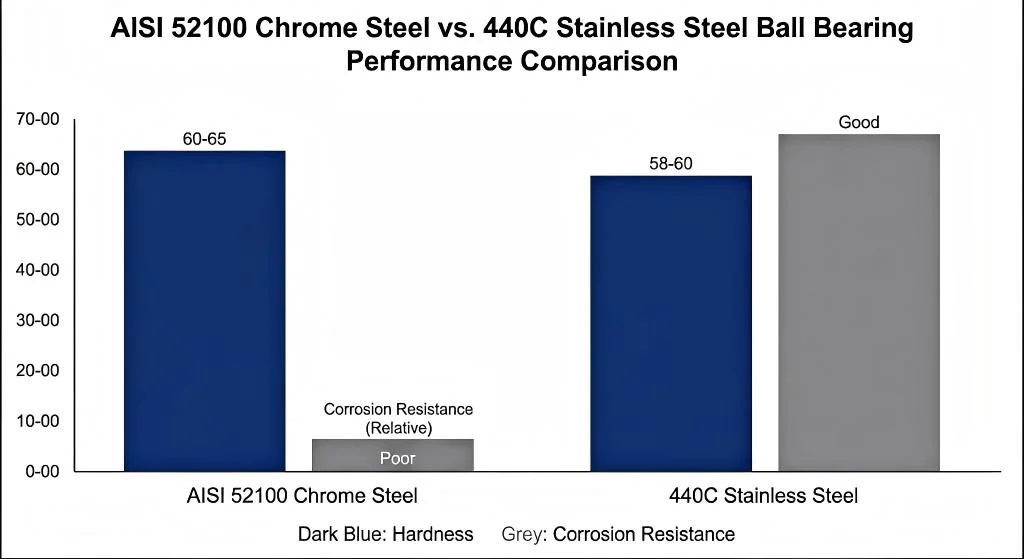
Precision Grades: Understanding ABEC and ISO Standards
Bearing performance is governed by tolerances measured in micrometers. The precision grade system defines these tolerances, directly correlating to rotational accuracy, noise levels, and operational speed capabilities.
ABEC Scale (Annular Bearing Engineering Committee):
ABEC 1: General industrial use, tolerance ±0.0050 mm
ABEC 3: Standard machinery, tolerance ±0.0025 mm
ABEC 5: Precision equipment, tolerance ±0.0013 mm
ABEC 7: High-speed spindles, tolerance ±0.0008 mm
ABEC 9: Ultra-precision aerospace applications, tolerance ±0.0005 mm
ISO Grade Equivalents:
The ISO 492 standard provides international classification, where lower numbers indicate higher precision (opposite to ABEC):
ABEC 1 = ISO P0 (Normal)
ABEC 5 = ISO P5 (Precision)
ABEC 7 = ISO P4 (High Precision)
ABEC 9 = ISO P2 (Ultra Precision)
Higher precision grades require exponentially more manufacturing control. An ABEC 9 precision steel ball undergoes multiple lapping operations and dimensional verification at controlled temperatures to maintain sphericity within 0.13 micrometers—approximately 1/500th the width of a human hair.
Application-Based Selection:
Conveyor systems, agricultural equipment: ABEC 1-3 sufficient
CNC machine tools, robotics: ABEC 5-7 required
Dental drills, hard disk drives: ABEC 7-9 necessary
Satellite mechanisms, precision instruments: ABEC 9+ mandatory
Specifying unnecessarily high precision grades inflates costs without performance benefits. Our product selection guide helps match precision requirements to actual operational demands.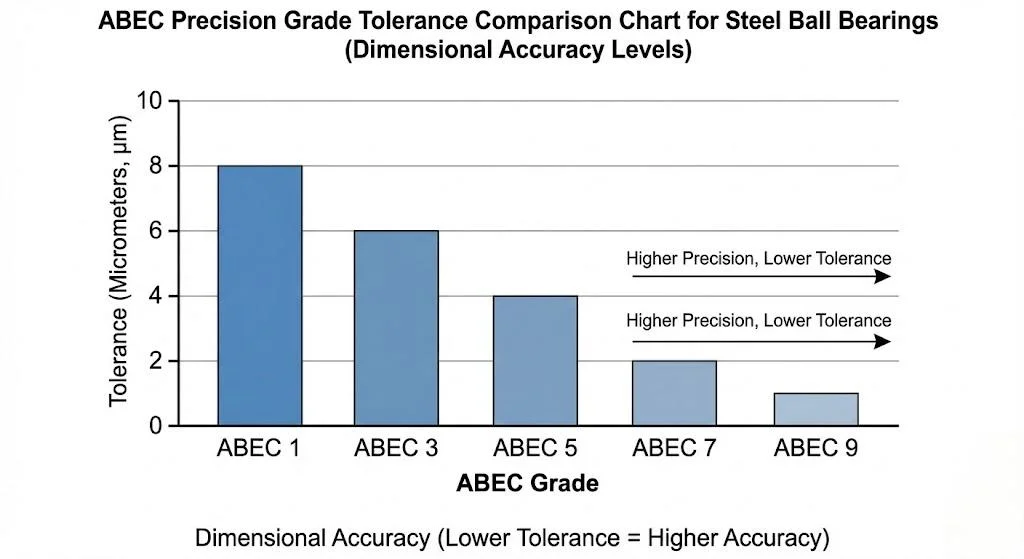
Manufacturing Quality: What Separates Leading Steel Ball Manufacturers
Not all steel balls are created equal. Manufacturing process control determines whether a bearing operates quietly for years or develops premature wear patterns within months.
Critical Manufacturing Stages:
Raw Material Verification
Reputable steel ball manufacturer facilities begin with certified mill test reports (MTRs) verifying chemical composition. Spectrographic analysis confirms alloying elements meet specifications before wire rod enters production. Substandard manufacturers skip this step, introducing material variability that compromises heat treatment results.
Forming and Heat Treatment
Cold heading forms the basic sphere geometry, but heat treatment develops the crystalline structure that enables load-bearing capacity:
Austenitizing: Heating to 820-860°C transforms steel structure
Quenching: Rapid cooling to room temperature locks in hardness
Tempering: Controlled reheating to 150-200°C relieves internal stress
Time-temperature control: Deviations of ±10°C compromise final properties
Advanced manufacturers employ continuous furnaces with atmosphere control, preventing decarburization that weakens surface layers. Budget suppliers using batch processing introduce temperature variations across production lots.
Grinding and Lapping
Achieving precision tolerances requires progressive abrasive operations:
Rough grinding: Removes forming marks, establishes size
Fine grinding: Achieves roundness within grade specification
Lapping: Final polishing for surface finish Ra 0.02 μm or better
Premium facilities inspect 100% of production using laser micrometers and surface profilometers. Statistical process control (SPC) charts track dimensional drift before it exceeds tolerances. Lesser manufacturers rely on sampling, allowing defective balls to reach customers.
Surface Treatments (Optional)
Specialized applications demand additional processing:
Titanium nitride (TiN) coating: Reduces friction, extends wear life 3-5x
Electropolishing: Removes surface defects for cleanroom environments
Passivation: Enhances corrosion resistance of stainless grades
Quality Certifications to Verify:
When evaluating a steel ball manufacturer, require documentation of:
ISO 9001:2015 quality management certification
ISO/TS 16949 automotive quality standards (if applicable)
IATF 16949 certification for automotive supply chains
RoHS and REACH compliance for European markets
Material traceability through production lot codes
Manufacturing excellence manifests in consistency. Request sample lots from different production dates and measure dimensional variation. Reputable manufacturers maintain tolerances within 10% of grade specification across all batches. To review our quality assurance processes, visit our manufacturing capabilities page.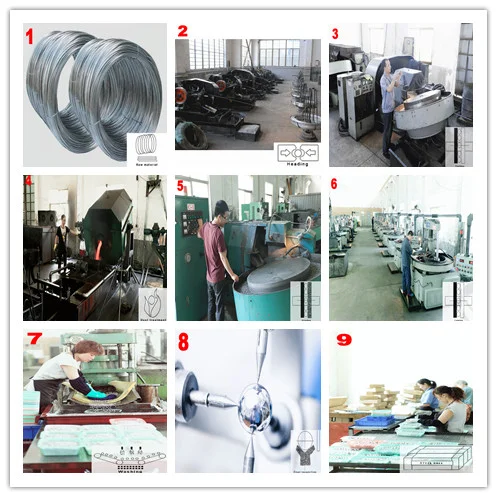
Sourcing Guide: Selecting the Right Steel Ball Supplier
Supply chain decisions impact not just unit cost, but total cost of ownership. A cheaper steel ball supplier delivering inconsistent quality generates downstream costs in machine downtime, premature replacement, and warranty claims that dwarf initial savings.
Evaluation Criteria for Supplier Selection:
Technical Capability Assessment
Size range availability: Can the supplier provide 1.5mm miniature balls through 50mm+ sizes?
Material breadth: Chrome steel, multiple stainless grades, ceramic hybrids?
Custom capabilities: Non-standard sizes, special coatings, matched sets?
Precision range: ABEC 1 through ABEC 9 manufacturing capability?
Suppliers specializing in narrow product ranges often provide superior expertise and quality control within their niche compared to broad-line distributors.
Quality Assurance Infrastructure
Request facility audits or third-party inspection reports verifying:
Dimensional inspection equipment calibration records
Hardness testing protocols and frequency
Surface finish measurement capabilities
Defect detection systems (visual, magnetic particle, eddy current)
A steel ball supplier resistant to providing quality documentation likely lacks robust controls.
Inventory and Lead Time Management
Critical questions for supply continuity:
Minimum order quantities: Do MOQs align with your consumption rate?
Stock availability: Are common sizes stocked or made-to-order?
Lead time consistency: What's the standard deviation of quoted vs. actual delivery?
Emergency supply capability: Can the supplier expedite critical shortages?
Industries with unpredictable demand patterns benefit from suppliers maintaining broad inventory depths, while high-volume OEMs may negotiate dedicated production runs.
Commercial Terms and Support
Pricing structure: Volume discounts, blanket order programs, consignment inventory options
Technical support: Applications engineering assistance, failure analysis services
Documentation: Certificates of conformance, material test reports, dimensional inspection data
Packaging options: Bulk bags, precision tubes, cleanroom packaging for contamination-sensitive applications
Logistics and Shipping Considerations
Global sourcing introduces complexity beyond unit pricing:
Import Duty Classifications: Steel balls fall under HS code 7326.11 (grinding balls) or 8482.10 (bearing balls) depending on specification and end-use, with duty rates varying by country of origin. Verify classification with your customs broker to avoid unexpected landed cost increases.
Shipping Methods by Order Volume:
Small samples/emergency orders: Air freight, 3-7 days, premium cost
Standard production orders: Ocean freight LCL (less than container load), 4-6 weeks
High-volume contracts: FCL (full container load), 4-6 weeks, optimal cost per unit
Packaging for Transit: Precision grades require sealed, desiccant-protected packaging to prevent corrosion during ocean transit. Budget suppliers shipping in generic cardboard expose products to humidity damage.
Domestic vs. International Sourcing Trade-offs:
| Factor | Domestic Supplier | International Supplier |
|---|---|---|
| Lead time | 1-3 weeks | 4-8 weeks |
| Minimum order | Lower MOQs | Higher MOQs |
| Communication | Same timezone, language | Time/language barriers |
| Quality recourse | Easier returns/claims | Complex international claims |
| Unit cost | 15-40% higher | Lower base cost |
Strategic buyers maintain relationships with both domestic steel ball supplier partners for responsive service and international sources for cost-effective volume procurement.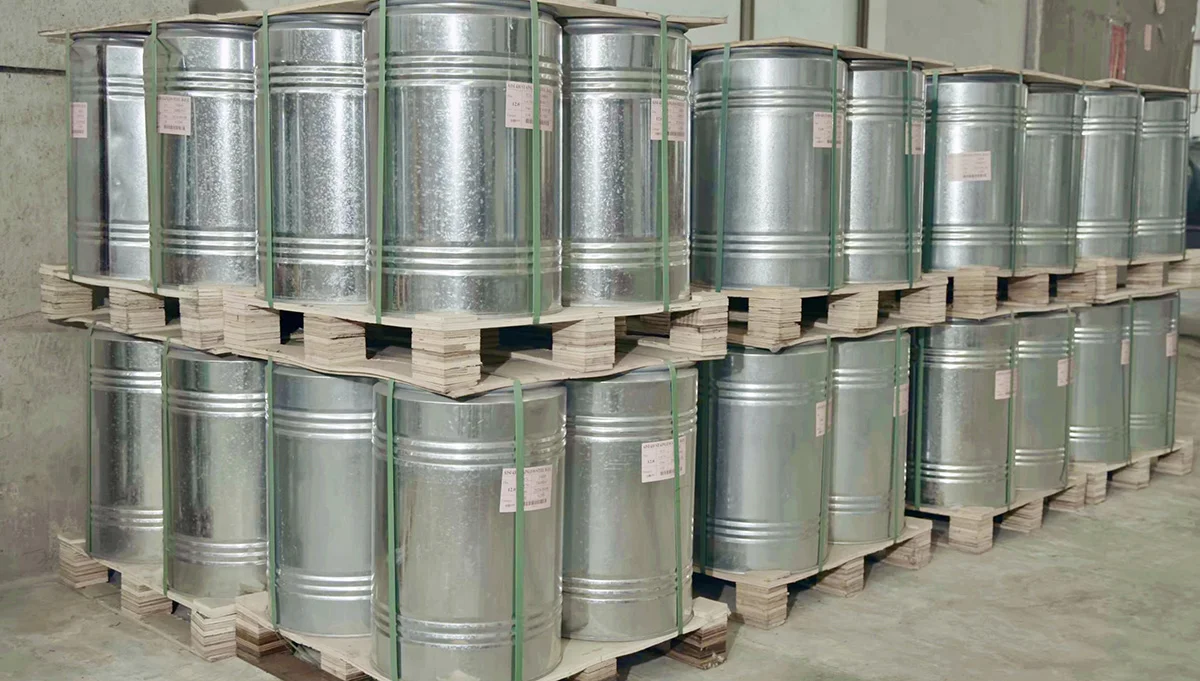
Conclusion: Optimizing Steel Ball Bearing Procurement
Steel ball bearings represent a critical junction where material science, precision manufacturing, and supply chain strategy converge. Optimal procurement requires balancing technical specifications against operational requirements and total cost considerations.
Key takeaways for industrial buyers:
Material selection (chrome steel vs. stainless) must align with environmental conditions and load requirements
Precision grade specification should match actual operational needs—over-specifying wastes budget, under-specifying compromises performance
Manufacturer quality systems and process controls determine consistency and longevity more than marketing claims
Supplier evaluation must consider technical capability, quality assurance, and supply chain reliability beyond unit pricing
The difference between average and exceptional bearing performance often traces back to procurement decisions made before the first component enters service. Organizations that invest in understanding these technical nuances and building relationships with capable suppliers create competitive advantages through reduced downtime, extended maintenance intervals, and lower total cost of ownership.
Ready to optimize your steel ball bearing supply chain? Our engineering team provides complimentary application reviews and supplier qualification assistance. Contact our technical specialists to discuss your specific requirements and receive customized recommendations based on your operational parameters.


