


News

Where to Buy Bearing Balls (Steel Balls): A Technical Sourcing Guide for Bearing Engineers
When sourcing bearing balls , engineers require suppliers who can demonstrate measurable quality control, material traceability, and compliance with ISO 3290 standards. This guide provides a systematic framework for evaluating steel ball manufacturers and distributors.
Understanding Bearing Ball Specifications: ISO 3290 Standards
Material Categories for Bearing Applications
Chrome steel (AISI 52100 / DIN 100Cr6):
Chemical composition: 0.95–1.10% C, 1.30–1.60% Cr per ASTM A295
Hardness after heat treatment: HRC 60–67 (typical range per manufacturer capability)
Primary use: High-load, high-speed bearing applications
Martensitic stainless steel (AISI 440C):
Chemical composition: 0.95–1.20% C, 16.0–18.0% Cr
Hardness: HRC 58–62 (hardened and tempered condition)
Primary use: Corrosive environments, food processing equipment
Austenitic stainless steel (AISI 316):
Hardness: Rockwell B 95 max (annealed), or HRC 40–45 (cold worked)
Primary use: Marine environments, chemical processing (moderate load applications)
Ceramic (Silicon Nitride - Si3N4):
Hardness: HRA 78–80 (not measured on HRC scale)
Primary use: High-temperature, electrical-insulation-required applications
ISO 3290-1 Precision Grade Requirements
The table below shows key parameters per ISO 3290-1:2014 for chrome steel balls (for nominal diameter range 0.5–25.4 mm):
| Grade | Diameter Variation (Vdws) μm | Deviation from Spherical Form (ΔSph) μm | Surface Roughness (Ra) μm | Typical Applications |
|---|---|---|---|---|
| G5 | 0.13 | 0.13 | 0.014 | Ultra-precision spindle bearings |
| G10 | 0.25 | 0.25 | 0.020 | Precision instrument bearings, machine tool spindles |
| G20 | 0.50 | 0.50 | 0.032 | Electric motor bearings, automotive wheel bearings |
| G28 | 0.70 | 0.70 | 0.040 | General industrial bearings, conveyor systems |
| G100 | 2.50 | 2.50 | 0.10 | Low-precision applications, grinding media |
Critical note: The values above apply to specific diameter ranges per ISO 3290-1 tables. Always verify the standard's complete specification for your exact ball diameter, as tolerance bands tighten or widen based on size.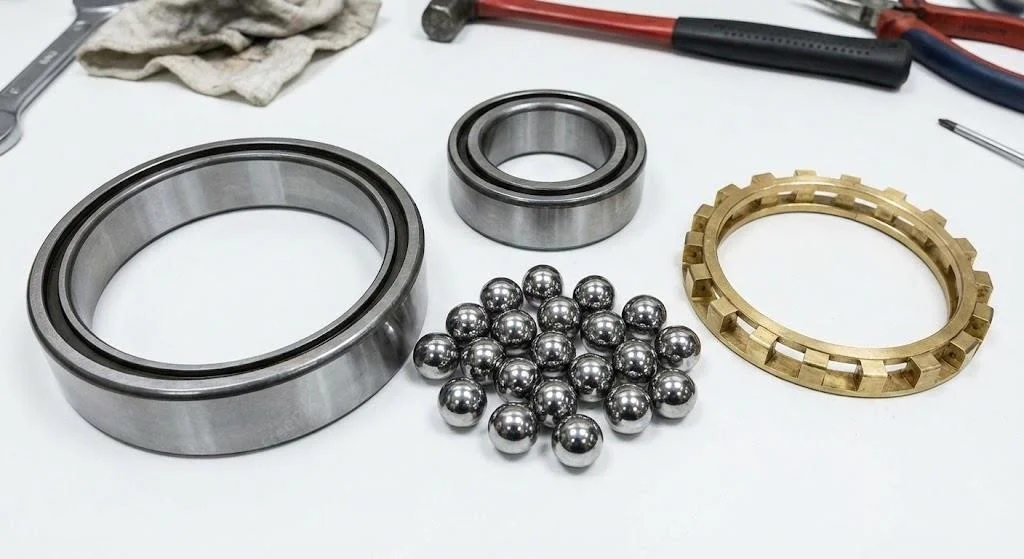
Primary Sourcing Channels: Where Engineers Buy Bearing Balls
1. Specialized Steel Ball Manufacturers
When to source directly:
Volume requirements exceeding 10,000 pieces per order
Custom specifications needed: Non-standard diameters, special material grades, specific heat treatment requirements
Long-term supply agreements with stable pricing and delivery schedules
Technical collaboration required for new bearing designs or material optimization
Manufacturer qualification criteria:
? Quality management certification: IATF 16949:2016 (automotive), ISO 9001:2015 (general industrial), or AS9100 (aerospace)
? Heat treatment capability: In-house CQI-9 compliant furnaces with documented process control (Cpk ≥1.33 for critical parameters)
? Metrology equipment: Roundness measurement systems (0.01 μm resolution minimum), hardness testers, roughness profilometers
? Material testing: Optical emission spectrometry for chemistry verification, magnetic particle inspection for surface defects
? Production capacity: Monthly output aligned with your demand including peak season requirements
Example capability baseline: Changzhou Eurasian Steel Ball Co., Ltd. operates CQI-9 standard heat treatment lines (austenitizing, quenching, tempering with real-time temperature monitoring) and maintains a quality laboratory equipped with:
Roundness gauge (Talyrond-type, 0.01 μm resolution)
Rockwell hardness tester (HRC scale, ±0.5 HRC accuracy)
Optical emission spectrometer (PPM-level element detection)
Vibration measurement system for dynamic ball quality assessment
These capabilities support production of chrome steel balls meeting ISO 3290 Grade 10–100 requirements with documented process capability.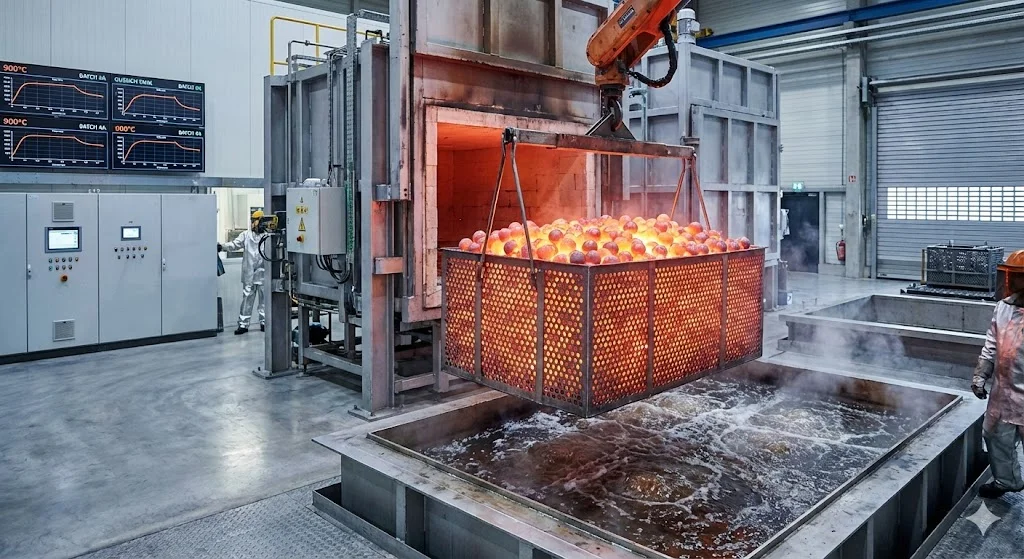
2. Industrial Bearing Component Distributors
Appropriate use cases:
Prototype/R&D quantities: 100–5,000 pieces for testing and validation
Emergency replacements when lead time cannot exceed 48–72 hours
Multi-specification small lots: Ordering 3–5 different sizes simultaneously below manufacturer MOQ
Geographic proximity preference for reduced freight cost and customs complexity
Distributor evaluation checklist:
Inventory turnover verification: Request stock age documentation (ideally under 12 months for carbon/chrome steel balls stored in standard industrial conditions with VCI packaging)
Source traceability: Distributor must provide original manufacturer's material certificates and dimensional reports
Quality deviation handling: Clarify return/replacement policy if delivered balls fail your incoming inspection
Technical support capability: Assistance with grade selection or bearing design consultation
Pricing consideration: Distributor markups typically range 40–80% above manufacturer direct pricing, justified by smaller lot flexibility, faster delivery, and local inventory risk absorption.
3. Online B2B Marketplaces
Due diligence protocol:
Supplier credibility verification:
Operating history: Minimum 8–10 years in steel ball manufacturing (verifiable through business registration)
Certification validity: Request current (not expired) ISO/IATF certificate copies with scope covering bearing balls
Customer reference checks: Contact 2–3 existing customers in similar application sectors
Factory audit reports: Third-party inspection records (SGS, TüV, Bureau Veritas)
Sample testing requirements:
Initial sample size: 200–500 pieces for comprehensive evaluation
Testing protocol: Measure 20 randomly selected balls for:
Diameter (micrometer, ±0.5 μm accuracy): Calculate Vdws per ISO 3290
Roundness (roundness gauge): Verify ΔSph compliance
Hardness (5 balls minimum): Confirm HRC 60–67 range for chrome steel
Surface finish (profilometer on 3 balls): Validate Ra specification
Risk indicator: If quoted pricing is 50%+ below established market rates for equivalent grade/material, investigate potential issues including material substitution, precision downgrade, non-compliant heat treatment, or inadequate quality control.
Supplier Technical Capability Assessment
Critical Questions for Bearing Ball Manufacturers
1. What is your heat treatment process control methodology?
What to look for in the response:
Furnace type (batch vs. continuous) and atmosphere control (endothermic gas composition)
Austenitizing temperature range and hold time for 52100 steel (typically 820–850°C)
Quench medium (oil type, temperature maintenance, agitation system)
Tempering cycle (temperature, duration, cooling rate)
Process monitoring: Real-time temperature recording, thermocouple placement, SPC charts
CQI-9 assessment score if applicable for automotive customers: Self-assessment vs. third-party audit results
Red flag: Generic answers without specific temperature ranges or process control data.
2. How do you verify dimensional consistency within production lots?
Expected response elements:
Sampling plan: Statistical sampling frequency (e.g., 100% inspection for G10, statistical sampling for G28)
Measurement equipment: Specific gauge types, calibration intervals, measurement uncertainty
Data recording: SPC charts showing Vdws, ΔSph, Ra over time
Process capability indices: Cpk values for critical dimensions (target ≥1.33)
Lot acceptance criteria: Maximum allowable variation before lot rejection
Benchmark reference: Leading manufacturers maintain Cpk ≥1.67 for G10 grade production, meaning process capability significantly exceeds minimum specification requirements.
3. What is your quality documentation and traceability system?
Required documentation per lot/batch:
Material certificate: Chemistry analysis matching ASTM A295 for 52100 steel
Heat treatment record: Furnace number, date, temperature curve, lot identifier
Dimensional inspection report: Vdws, ΔSph, Ra measurements with sample size noted
Hardness test results: HRC values, test locations, number of tests performed
Batch traceability code: Laser etching or packaging label linking to production records
Retention requirement: Quality records should be maintained for 10+ years to support bearing failure investigations and warranty claims.
4. What are your typical lead times for different specifications?
Realistic timeframe ranges (from PO confirmation to shipment):
Standard stock sizes (G20–G100, common diameters 3–25mm): 5–10 days
Custom diameters within existing tooling capability: 15–25 days
Special materials (440C, ceramic): 20–35 days
New tooling development for non-standard diameters: 40–60 days
Note: Lead times vary by manufacturer capacity utilization. Establish safety stock levels (typically 8–12 weeks consumption) for critical applications to buffer against supply chain variability.
5. What technical support do you provide for bearing design applications?
Value-added services from capable suppliers:
Load capacity calculations using Hertzian contact stress analysis
Material selection guidance based on operating environment (temperature, corrosion, contamination)
Bearing life estimation using ISO 281 or similar methodology
Failure analysis support including metallurgical examination and fractography
Application-specific testing such as accelerated wear testing and contamination resistance evaluation
Quality Verification Upon Receipt
Incoming Inspection Protocol for Precision Steel Balls
Statistical sampling approach:
For lot sizes 5,000–50,000 pieces, use AQL 0.65 (ISO 2859-1):
Sample size: 125 pieces for general inspection level II
Acceptance number: 2 (reject lot if 3 or more defects found)
Measurement procedure:
Dimensional verification:
Randomly select 20 balls from different locations in the shipment
Measure each ball's diameter in 3 orientations using calibrated micrometer
Calculate lot diameter variation (Vdws): (Dmax - Dmin) of the 20 balls
Verify Vdws ≤ specified grade tolerance per ISO 3290 table
Hardness testing:
Select 5 balls randomly
Test each ball at 2 locations (opposite sides)
Calculate average and range
For 52100 chrome steel: Accept if average = HRC 60–67, range ≤3 HRC
Visual inspection:
Examine 100% of sampled balls under 10x magnification
Reject criteria: Surface cracks, pitting, discoloration, embedded particles
Acceptable: Minor polishing marks if Ra specification is met
Non-conformance response:
Document findings with measurements and photos
Contact supplier within 48 hours of receipt
Request disposition: Full lot replacement, sorting/re-inspection, or price adjustment
Cost Structure Analysis
Pricing Factors for Bearing Steel Balls
Variables affecting unit cost:
Precision grade: G10 balls cost 2.5–3.5x more than G100 (same diameter/material)
Material type: 440C stainless steel = 1.8–2.2x chrome steel cost; Ceramic = 6–10x chrome steel
Order volume: Orders exceeding 50,000 pieces typically unlock volume discounts in the 15–25% range
Diameter: Non-standard sizes require tooling setup costs amortized over order quantity
Additional processing: Coatings (TiN, CrN) add 30–60% to base ball cost
Representative pricing reference (FOB basis, subject to raw material fluctuations):
Note: The following ranges are illustrative market observations as of Q4 2024–Q1 2025 for reference purposes. Actual pricing depends on order specifications, supplier, and negotiation.
10mm chrome steel balls, Grade 20, orders of 10,000+ pcs: Approximately $25–40 per 1,000 pieces
10mm chrome steel balls, Grade 10, orders of 10,000+ pcs: Approximately $65–95 per 1,000 pieces
10mm 440C stainless steel balls, Grade 16, orders of 10,000+ pcs: Approximately $120–180 per 1,000 pieces
Volume discount structure (typical industry pattern):
10,000–49,999 pcs: Base pricing tier
50,000–99,999 pcs: Potential discount range 12–18%
100,000–499,999 pcs: Potential discount range 20–28%
500,000+ pcs with annual contract: Potential discount range 28–35%
Total Cost of Ownership Considerations
Beyond unit price evaluation:
Defect rate impact example:
Supplier A: $50/1,000 pcs with 1.5% defect rate → Effective cost includes sorting labor
Supplier B: $58/1,000 pcs with 0.2% defect rate → May deliver better value despite higher list price
Delivery reliability factors:
Late deliveries causing production line stoppages: Costs vary significantly by industry (typically $500–5,000 per hour)
Safety stock carrying cost: Annual cost ranges 15–25% (inventory holding plus obsolescence risk)
Optimal balance: 2–3 qualified suppliers with diversified volume allocation
Technical support value:
Bearing design consultation can reduce development time significantly
Failure analysis prevents recurring issues (average bearing failure investigation: $2,000–15,000 depending on complexity)
Regional Sourcing Considerations
China-Based Steel Ball Manufacturers
Competitive advantages:
Production scale: Facilities producing 100–500 million balls annually enables competitive pricing
Material availability: Proximity to steel mills provides shorter lead times for raw material
Tooling flexibility: Lower setup costs for custom diameters compared to some Western manufacturers
Quality assurance requirements:
Certification verification: Confirm IATF 16949 scope explicitly covers bearing balls (some certificates exclude certain product lines)
Third-party inspection: Engage SGS, Bureau Veritas, or TüV for pre-shipment inspection (typical cost: $300–800 per inspection, covers dimensional, hardness, and visual checks)
First Article Inspection (FAI): Before bulk production approval, verify:
Material certificate chemistry matches ASTM specification
Heat treatment produces HRC 60–67 for chrome steel
Dimensional measurements confirm grade compliance
Surface finish meets Ra requirement
Example: Changzhou Eurasian Steel Ball Co., Ltd. holds:
IATF 16949:2016 (automotive quality system)
ISO 22716:2007 (cosmetic GMP - demonstrates process discipline)
Bureau Veritas factory audit (third-party verification of manufacturing capability)
These certifications demonstrate systematic quality management rather than batch-by-batch quality variation.
North American / European Suppliers
When to select regional suppliers:
Regulatory requirements: Aerospace (AS9100), medical devices (ISO 13485), nuclear (NQA-1)
Intellectual property concerns: Proprietary bearing designs requiring NDA enforcement
Just-in-time delivery: Requirements under 72-hour lead time (consignment inventory programs)
Small development quantities: 50–500 pieces with frequent specification changes
Cost-benefit analysis:
Typical price premium: 40–80% vs. Asian manufacturers for equivalent grade/material
Freight advantage: 3–7 day delivery vs. 30–45 day ocean freight
Quality consistency: Generally higher Cpk values (1.67–2.0 vs. 1.33–1.5 range)
Red Flags: Supplier Warning Signs
Technical capability concerns:
? Cannot provide detailed heat treatment parameters (temperature ranges, hold times, quench media)
→ Risk: Inconsistent hardness, premature bearing failure
? No in-house metrology equipment (outsources all dimensional inspection)
→ Risk: Cannot verify lot-to-lot consistency, delayed defect detection
? Refuses pre-production sample testing or limits sample quantity to under 50 pieces
→ Risk: Concealing quality issues, inadequate process control
? Material certificates lack heat/lot traceability codes
→ Risk: Cannot investigate defects, potential material substitution
? Hardness variation exceeding 3 HRC within sample batch (for chrome steel balls)
→ Risk: Poor heat treatment control, premature bearing wear
? Claims "all precision grades same lead time" (G10 and G100 both listed as "stock items")
→ Risk: Mislabeling lower grades as higher precision
? No documented process capability data (Cp/Cpk studies)
→ Risk: Cannot predict quality consistency over time
Business practice concerns:
? Requires 100% prepayment for initial orders (no Letter of Credit or inspection holdback)
→ Risk: Limited recourse if quality is non-conforming
? No clear non-conformance resolution process
→ Risk: Disputes over quality acceptance, delayed replacements
? Cannot provide customer references in your industry/application
→ Risk: Lack of proven track record, potential application misfit
Case Study: Bearing Ball Supplier Qualification Process
Scenario: European bearing manufacturer qualifying a Chinese chrome steel ball supplier for automotive wheel bearing application (Grade 20, 12.7mm diameter, annual volume 2 million pieces).
Qualification timeline:
Month 1: Documentation review
IATF 16949 certificate verification (contacted certification body directly)
Reviewed 12 months of Cpk data for similar diameter/grade
Analyzed customer complaint logs (0.08% return rate, primarily packaging damage)
Month 2: Factory audit
Third-party audit (Bureau Veritas): CQI-9 heat treatment assessment score 87/100
Verified metrology calibration records (NIST-traceable standards)
Observed production line: 100% automated diameter sorting, statistical sampling for roundness
Month 3–4: Trial production
50,000-piece trial lot produced under full inspection with customer witness
Dimensional results: Vdws = 0.42 μm (spec: ≤0.50 μm), Cpk = 1.55
Hardness results: Average HRC 63.2 (range HRC 62–65), Cpk = 1.71
No surface defects in 1,000-piece visual inspection sample
Month 5–6: Application validation
Assembled 500 bearings with trial balls
Accelerated life testing: 95% confidence interval = 1.8–2.1x L10 life (compared to incumbent supplier: 1.9–2.2x)
Vibration testing: No significant difference in bearing noise levels
Result: Supplier approved for 60% of annual volume allocation (1.2M pieces). Negotiated pricing approximately 22% below incumbent European supplier. Quality agreement includes:
Quarterly Cpk reporting requirement
Annual third-party audit at customer expense
Price adjustment clause if defect rate exceeds 0.3% in any quarter
Key success factors:
6-month qualification investment (audit plus testing cost: approximately $18,000)
Structured evaluation with measurable criteria
Dual-source strategy maintained for risk mitigation
Procurement Best Practices
Request for Quotation (RFQ) Template Elements
Technical specification section:
Material: AISI 52100 (or equivalent DIN 100Cr6, JIS SUJ2)
Diameter: 12.700 mm nominal (state tolerance per ISO 3290)
Precision grade: Grade 20 per ISO 3290-1:2014
Hardness: HRC 60–67 (Rockwell C scale)
Surface finish: Ra ≤0.032 μm
Quantity: 100,000 pieces per order, estimated annual volume 500,000 pieces
Quality documentation requirements:
Material certificate per EN 10204 3.1 (mill test certificate)
Dimensional inspection report (minimum 20-ball sample measurement)
Hardness test results (minimum 5 balls tested)
Heat treatment record (furnace ID, date, temperature curve)
Batch traceability marking system description
Commercial terms:
Pricing: FOB [Port], USD per 1,000 pieces
Payment: 30% deposit, 70% against copy of Bill of Lading
Lead time: Standard production schedule
Packaging: VCI-treated, moisture barrier bags, dimension labeled cartons
Inspection: Right to third-party pre-shipment inspection at seller's facility
Supplier Performance Monitoring
Quarterly scorecard metrics:
| Category | Metric | Target | Weight |
|---|---|---|---|
| Quality | Incoming inspection defect rate | <0.5% | 40% |
| Delivery | On-time delivery (±3 days) | >95% | 25% |
| Documentation | Complete/accurate certificates | 100% | 15% |
| Responsiveness | Technical inquiry response time | <24 hours | 10% |
| Continuous improvement | Cpk improvement year-over-year | +5% | 10% |
Performance-based actions:
Score 90–100: Preferred supplier status, volume increase consideration
Score 75–89: Acceptable, continue monitoring
Score below 75: Corrective action plan required within 30 days
Emerging Trends in Bearing Ball Procurement
1. Sustainability Requirements
Carbon footprint considerations:
Heat treatment energy consumption: Electric furnaces (0.8–1.2 kWh/kg) vs. gas furnaces (1.5–2.0 kWh/kg equivalent)
Packaging materials: Recyclable cardboard vs. single-use plastics
Transportation mode: Ocean freight (0.01 kg CO2/ton-km) vs. air freight (0.5 kg CO2/ton-km)
Supplier ESG expectations:
ISO 14001 environmental management certification
Renewable energy usage disclosure (solar, wind percentage of total consumption)
Waste heat recovery systems in heat treatment lines
2. Industry 4.0 Integration
Digital quality traceability:
QR codes on packaging linking to digital quality certificates
Blockchain-based material provenance tracking (pilot projects in aerospace sector)
AI-driven defect prediction using process parameter correlation
Predictive ordering systems:
IoT sensors monitoring bearing usage patterns
Automatic reorder triggers based on consumption rate algorithms
Supplier portal integration for real-time inventory visibility
3. Advanced Material Development
Emerging specifications:
Hybrid ceramic-steel balls (Si3N4 rolling elements plus steel races) for electric vehicle motors
Nitrogen-strengthened steels (higher fatigue life vs. standard 52100)
Corrosion-resistant coatings (TiN, DLC) for harsh environment applications
Engineer collaboration opportunities:
Joint material testing programs with universities/research institutes
Accelerated life testing data sharing (confidential aggregation)
Application-specific specification development beyond ISO 3290 standard grades
FAQ: Technical Questions from Bearing Engineers
Q1: How do I verify the actual precision grade of delivered bearing balls?
A: Use the following verification methods in your incoming inspection:
Roundness measurement: Use a roundness gauge with ±0.1 μm resolution minimum to measure deviation from perfect sphericity (ΔSph)
Diameter measurement: Measure 20 balls with a micrometer having ±0.5 μm accuracy; calculate lot variation (Vdws) as the difference between maximum and minimum diameter
Surface roughness: Use a profilometer to verify Ra value matches the grade specification (e.g., ≤0.020 μm for G10 grade)
Hardness testing: Random sample testing with Rockwell C tester (should read HRC 60–67 for bearing steel)
Industry standard: Balls claiming G10 grade should have deviation from spherical form ≤0.25 μm and diameter variation within batch ≤0.25 μm per ISO 3290-1.
Q2: Can I mix steel balls from different suppliers in the same bearing assembly?
A: Not recommended for precision applications. Here's why:
Hardness variation (even 2-3 HRC difference) causes uneven load distribution among rolling elements
Diameter inconsistency (±1 μm between suppliers) affects bearing internal clearance and vibration characteristics
Surface finish differences lead to varying friction coefficients and heat generation patterns
Material composition variance results in different wear rates over time, causing premature bearing failure
Best practice: Use single-source chrome steel balls for each bearing assembly to ensure consistent performance and predictable bearing life. If dual-sourcing is required for supply security, qualify both suppliers to identical specifications and segregate by production lot.
Q3: What's the typical lead time when ordering bearing balls from manufacturers?
A: Lead times vary by specification complexity:
Standard sizes (stock items): 3–7 days for commonly produced diameters in G20–G100 grades
Custom diameters (within existing tooling): 15–20 days if the size falls within current manufacturing capability
Special materials (440C, ceramic): 20–30 days due to specialized heat treatment or material procurement
New tooling required: 35–45 days when custom grinding wheels or fixtures must be manufactured
Pro tip: Maintain 2-3 months safety stock for critical applications where supply interruption would halt production. Many manufacturers offer VMI (Vendor Managed Inventory) programs where they monitor your usage patterns and automatically replenish stock based on agreed reorder points.
Q4: How do I negotiate better pricing without sacrificing quality?
A: Effective negotiation strategies for bearing ball procurement:
Volume commitment: Annual contracts for quantities exceeding 500,000 pieces can secure volume discounts in the 20-30% range
Payment terms flexibility: NET 30 payment terms vs. prepayment may yield pricing adjustments (typically 3-5%)
Extended lead times: Allow 30-45 day lead time instead of rush orders (can reduce pricing by 10-15%)
Multi-specification bundling: Order 3-4 different sizes together to reach volume price breaks across combined quantities
Quality partnership approach: Long-term relationships with shared quality data reduce supplier's risk premium and enable better pricing
Warning: Avoid "lowest bidder" selection without quality consideration. A supplier offering 15% lower pricing but delivering 2% defect rate will cost more than a supplier with 10% price premium and 0.2% defect rate when factoring bearing assembly rework costs and field failure expenses.
Q5: What documentation should I request with bearing ball shipments?
A: Essential documents for quality traceability:
Material Test Report (MTR): Chemical composition analysis per ASTM A295, including C, Cr, Mn, Si, P, S percentages
Dimensional Inspection Report: Diameter measurements, roundness (ΔSph), surface finish (Ra) with sample size noted
Hardness Test Certificate: HRC values with test locations, date, and number of samples tested
Heat Treatment Record: Furnace temperature curve, quench oil temperature, lot identifier
Certificate of Conformance: Supplier attestation to your PO specifications with authorized signature
Batch traceability label: Unique identifier on packaging enabling tracking if quality issues arise
Industry best practice: Require supplier to maintain quality records for 10+ years to support bearing failure investigations and warranty claims. Include this retention requirement in your purchase agreement.
Q6: Are there industry-specific certifications I should look for when buying bearing balls?
A: Yes, depending on your application sector:
Automotive bearings: IATF 16949:2016 (mandatory for Tier 1 automotive suppliers)
Aerospace bearings: AS9100D certification with Nadcap approval for heat treatment
Medical device bearings: ISO 13485 for medical device quality management
Food processing bearings: NSF certification for food-grade materials and lubricants
Wind energy bearings: ISO 3290-1 compliance with DNVGL type approval
Additional quality system indicators:
CQI-9 heat treatment system assessment (automotive industry standard)
Third-party factory audits (Bureau Veritas, SGS, TüV)
Customer-specific approval status (if supplying to major OEMs)
Example: Our facility holds IATF 16949:2016 and Bureau Veritas certifications, ensuring steel ball manufacturing meets stringent automotive and industrial standards with systematic quality management.
Q7: What is the difference between buying bearing balls vs. complete bearing assemblies?
A: The decision depends on your manufacturing capability and application:
Buy bearing balls separately when:
You manufacture bearings in-house and need component-level sourcing control
You're replacing worn balls in repairable bearing designs (some large industrial bearings allow field service)
You require custom ball sizes not available in standard bearing catalogs
You need specific material grades for specialized environments (e.g., 440C for marine applications, ceramic for electrical insulation)
You're developing prototype bearings with experimental designs
Buy complete bearing assemblies when:
You lack bearing manufacturing equipment (grinding, lapping, assembly)
Standard catalog bearings meet your performance requirements
You need matched sets with optimized internal clearance
Quality assurance for complete bearing unit is simpler than qualifying individual components
Volume doesn't justify component-level procurement complexity
Technical consideration: If purchasing balls separately, you must ensure compatibility with your bearing races (geometry, material hardness differential, surface finish interaction) and maintain proper internal clearance through precise diameter selection.
Conclusion: Strategic Sourcing for Bearing Performance Excellence
Knowing where to buy bearing balls requires understanding not just supplier locations, but how to evaluate technical capability and what quality standards to demand for your specific application requirements.
Key takeaways for engineers:
Prioritize supplier technical capability over price alone—CQI-9 heat treatment control and in-house metrology labs are essential for consistent quality
Verify precision grades through independent testing—don't rely solely on supplier claims; conduct incoming inspection per ISO 2859-1 sampling plans
Build strategic partnerships with 2-3 qualified sources to balance cost optimization, quality assurance, and supply security
Demand full material traceability—bearing failures years after installation require robust documentation trails linking back to production records
Whether sourcing from specialized steel ball manufacturers like Changzhou Eurasian Steel Ball Co., Ltd., regional distributors, or global marketplaces, apply the evaluation framework outlined in this guide to ensure your bearing ball procurement supports long-term equipment reliability and operational efficiency.
Ready to discuss your specific bearing ball requirements? Contact our engineering team for technical consultation on material selection, precision grade optimization, and volume pricing for your bearing applications.
About Changzhou Eurasian Steel Ball Co., Ltd.: IATF 16949:2016 certified manufacturer with dedicated CQI-9 heat treatment capability and in-house quality laboratory. We supply precision steel balls for bearings to automotive, industrial machinery, and aerospace industries worldwide, with full material traceability and technical support for bearing design optimization.


