


News

High Tolerance Precision Aluminum Balls for Mechanical Assemblies
In modern mechanical assemblies, every micron matters. Whether it is a high-speed valve system, a compact actuator, or a lightweight aerospace component, the performance of the entire system often depends on the consistency of its smallest elements. Among these, high tolerance precision aluminum balls have become a critical component in applications where weight reduction, corrosion resistance, and dimensional accuracy must coexist.
This article shares practical insights from manufacturing and application experience, focusing on how precision aluminum balls contribute to mechanical assemblies, how to select the right specifications, and how sourcing from an experienced manufacturer like Eurasian can influence long-term system reliability.
Why High Tolerance Precision Aluminum Balls Matter in Mechanical Assemblies
Mechanical assemblies are no longer designed with only strength in mind. Today’s engineering priorities include weight optimization, energy efficiency, and durability under varying environmental conditions. Precision aluminum balls address these needs by offering a unique combination of properties:
Lightweight structure for reduced inertia
Natural corrosion resistance
High machinability and surface finish potential
Stable performance in dynamic systems
Unlike traditional steel balls, aluminum variants reduce load on moving parts, especially in high-speed or sensitive assemblies. This becomes particularly valuable in industries such as aerospace, robotics, and fluid control systems.
In practice, engineers increasingly replace heavier materials with aluminum components to improve responsiveness and reduce energy consumption without sacrificing dimensional precision.
Material Composition and Its Impact on Performance
High-quality precision aluminum balls are typically manufactured using 1060 and 1070 aluminum, known for their high aluminum content (up to 99.6%). This purity directly affects corrosion resistance and surface finish quality.
Key Composition Advantages
High aluminum content (Al ≥ 99.6%) ensures excellent oxidation resistance
Low levels of Cu, Mg, and Zn minimize structural inconsistencies
Controlled Fe content enhances mechanical stability without compromising weight
This refined composition allows aluminum balls to maintain a bright, polished surface while delivering consistent dimensional tolerances across production batches.
For mechanical assemblies exposed to humidity, chemicals, or temperature fluctuations, this level of material stability is essential.
Precision Grades and Dimensional Control in Aluminum Ball Manufacturing
Tolerance is the defining factor in precision applications. Aluminum balls are typically produced within grades ranging from G500 to G1000, making them suitable for assemblies where ultra-high precision is not required but consistency is critical.
What High Tolerance Means in Real Applications
Reduced vibration in rotating systems
Better sealing performance in valves
Improved alignment in mechanical linkages
Lower wear rates over time
Manufacturers like Eurasian implement automotive-level quality systems such as IATF 16949:2016, ensuring that each batch meets strict dimensional and roundness requirements. This is especially important when aluminum balls are used in large-scale production environments.
Surface Finish and Anti-Corrosion Properties in Demanding Environments
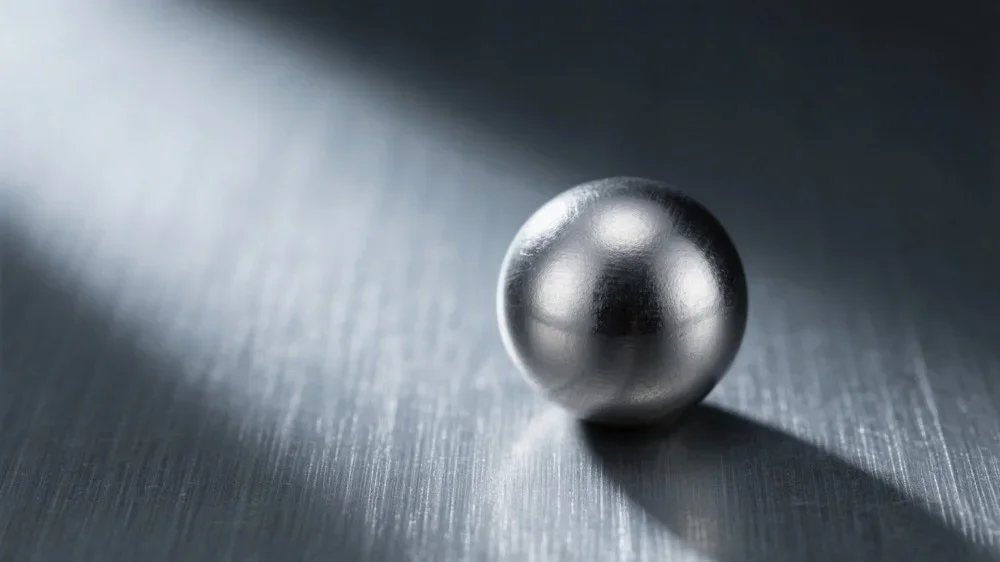
One of the defining features of precision aluminum balls is their high-polished mirror surface. This finish is not just aesthetic—it directly impacts performance.
Functional Benefits of a Mirror Surface
Reduced friction in contact interfaces
Improved sealing efficiency
Enhanced resistance to contamination buildup
Longer operational lifespan
Additionally, aluminum naturally forms a protective oxide layer, providing inherent corrosion resistance. This makes it ideal for use in humid or chemically active environments without requiring additional coatings.
For specialized applications, anodized finishes can further enhance durability while maintaining tight tolerances.
Applications Across Mechanical and Industrial Systems
High tolerance precision aluminum balls are widely used across industries due to their adaptability.
Common Mechanical Assembly Applications
Bearings in lightweight systems
Hydraulic and pneumatic components
Valve and pump assemblies
Sealing mechanisms
Stamping and die-casting systems
In aerospace and robotics, weight savings translate directly into performance gains. Even a small reduction in mass can significantly improve system efficiency and response time.
In fluid control systems, aluminum balls offer reliable sealing without the added weight of steel alternatives, making them ideal for portable or compact equipment.
Selecting the Right Aluminum Ball Type for Your Project
Choosing the correct specification requires balancing size, tolerance, and structural design.
Solid vs Hollow Structures in Aluminum Ball Applications
For applications requiring structural strength and stability, a solid aluminum ball is typically preferred. It provides better load-bearing capacity and maintains dimensional integrity under pressure.
On the other hand, hollow aluminum balls are often used in applications where weight reduction is the primary goal. These are commonly found in float systems, decorative industrial components, and low-load assemblies.
For larger components, such as a 2 inch aluminum ball, manufacturing precision becomes even more critical. Maintaining roundness and surface quality at larger diameters requires advanced process control and inspection systems.
Manufacturing Expertise Behind Consistent Quality
Producing high tolerance precision aluminum balls is not just about material selection—it requires advanced manufacturing capabilities and strict process control.
Key Manufacturing Factors
Cold heading and precision grinding
Controlled polishing processes
Advanced inspection equipment
Batch consistency management
Eurasian leverages its experience in producing chrome steel, stainless steel, and carbon steel balls to apply similar metallurgical expertise to aluminum ball production. This cross-material knowledge ensures consistent hardness, microstructure, and dimensional accuracy.
Additionally, heat treatment processes aligned with CQI-9 standards contribute to uniform performance across different material types.
Supply Chain Efficiency and One-Stop Sourcing
For OEMs and global buyers, sourcing precision components from multiple suppliers often leads to inconsistencies and increased costs.
Eurasian addresses this challenge by offering a full range of precision balls, including:
Bearing steel balls (GCr15 / AISI 52100)
Stainless steel balls
Carbon steel balls
Aluminum balls
Specialty balls for specific industries
This integrated approach allows customers to:
Standardize quality across components
Reduce procurement complexity
Improve logistics efficiency
Ensure compatibility within assemblies
For companies managing large-scale production, this level of supply chain optimization can significantly impact operational efficiency.
Global OEM Experience and Application Support
Working with international OEM customers requires more than manufacturing capability—it demands a deep understanding of application requirements, documentation standards, and quality expectations.
Eurasian has extensive experience supplying precision balls for:
Automotive seat systems
Wheel bearings
Industrial machinery
Export-oriented manufacturing projects
This experience translates into smoother communication, accurate documentation, and reliable delivery schedules. For buyers sourcing precision aluminum balls for critical applications, this reduces risk and improves project predictability.
Capacity, Flexibility, and Customization in Modern Production
In today’s fast-paced manufacturing environment, flexibility is just as important as quality.
Eurasian’s production capacity, measured in tons per day, enables it to support both:
Small trial orders for new product development
High-volume production for established programs
Customization Capabilities Include:
Size variations from micro balls to larger diameters
Flexible minimum order quantities (MOQs)
Customized packaging solutions
Application-specific surface treatments
This flexibility allows customers to scale production efficiently while maintaining consistent quality standards.
Practical Considerations for Engineers and Buyers
When integrating precision aluminum balls into mechanical assemblies, several practical factors should be considered:
Key Selection Criteria
Required tolerance grade (G500–G1000)
Load conditions and structural requirements
Environmental exposure (humidity, chemicals)
Surface finish requirements
Compatibility with other materials
Early collaboration with the manufacturer can help optimize these parameters, reducing the risk of design revisions and production delays.
Final Thoughts
High tolerance precision aluminum balls are no longer niche components—they are essential elements in modern mechanical assemblies that prioritize efficiency, durability, and lightweight design.
From material composition to manufacturing precision and supply chain integration, every factor contributes to overall system performance. Choosing a reliable partner like Eurasian ensures not only product quality but also consistency, scalability, and long-term value.
As industries continue to evolve toward lighter, more efficient systems, the role of precision aluminum balls will only become more significant—making informed sourcing and specification decisions more important than ever.
FAQ
1. What tolerance grades are available for precision aluminum balls?
Precision aluminum balls are typically available in grades ranging from G500 to G1000. These grades define roundness, diameter variation, and surface accuracy, making them suitable for mechanical assemblies where consistent performance is required but ultra-high precision (like bearing-grade steel balls) is not necessary.
2. What is the difference between solid aluminum ball and hollow aluminum balls?
A solid aluminum ball offers higher strength and load-bearing capacity, making it ideal for valves, pumps, and mechanical assemblies. In contrast, hollow aluminum balls are lighter and commonly used in applications where weight reduction is critical, such as floats or decorative industrial components.
3. Are precision aluminum balls resistant to corrosion and rust?
Yes, aluminum balls have natural corrosion resistance due to the formation of an oxide layer on their surface. This makes them suitable for humid or mildly corrosive environments without additional coatings. For enhanced protection, anodizing treatments can also be applied.
4. What industries commonly use high tolerance precision aluminum balls?
These balls are widely used in aerospace, automotive systems, fluid control (valves and pumps), robotics, sealing systems, and household appliances. Their lightweight and anti-corrosion properties make them especially valuable in applications requiring efficiency and durability.
5. Can I customize sizes such as a 2 inch aluminum ball for specific applications?
Yes, manufacturers like Eurasian offer customization in size, tolerance, and surface finish. A 2 inch aluminum ball or other non-standard dimensions can be produced based on specific project requirements, including OEM and bulk orders with tailored packaging and inspection standards.


