


News


S2 Tool Steel Balls for High Wear Resistance and Impact Loads
Why Material Selection Matters for Impact Loaded Steel Balls
When steel balls operate under repeated impact, abrasion, or sudden mechanical loading, material selection directly affects service life and dimensional stability. S2 tool steel balls are manufactured from AISI S-2 tool steel, a grade known for its combination of toughness, hardness, and resistance to shock loading. This balance makes them suitable for applications where ordinary bearing steel or general-purpose carbon steel balls may not provide sufficient durability.
For industrial buyers, identifying the correct material is especially important when sourcing replacement components or OEM parts. AISI S-2 is also identified by UNS T41902, providing a recognized material designation for technical documentation and purchasing requirements. Depending on the application, heat treatment, diameter, tolerance, surface finish, and inspection requirements can all be specified to achieve the required working performance.
S2 Tool Steel Balls and Their Impact Resistance
One of the main reasons buyers select S-2 tool steel balls is their ability to withstand mechanical shock. In detent mechanisms, locking assemblies, positioning components, and other applications involving repeated contact, the ball may experience localized impact rather than only smooth rolling. A material with adequate toughness can help reduce the risk of premature cracking or deformation during service.
The performance of a hardened tool steel ball is influenced not only by the steel grade but also by its heat-treatment condition. Quenching and tempering can be used to establish an appropriate balance between hardness and toughness. Instead of pursuing maximum hardness alone, manufacturers and engineers should consider the actual loading conditions, contact pressure, frequency of impact, and required service life when defining the target condition.
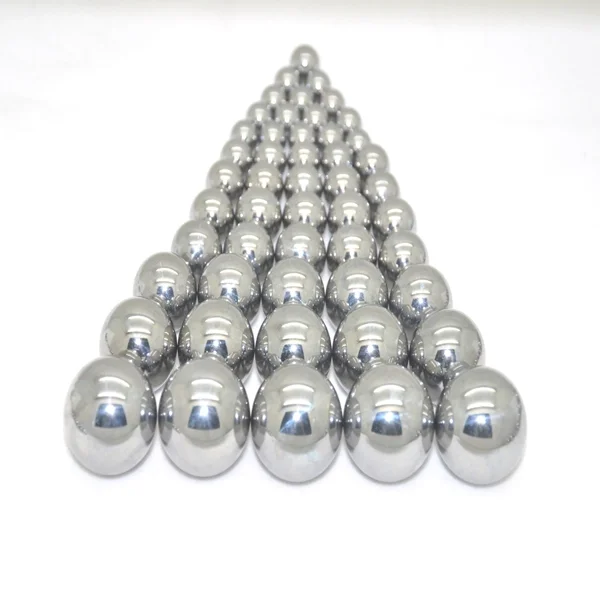
AISI S-2 Steel Grade for Demanding Industrial Applications
AISI S-2 tool steel balls are often selected where mechanical shock resistance is more important than simply achieving a high hardness value. S-2 tool steel belongs to the shock-resistant tool steel category, making its material characteristics relevant to components exposed to sudden loading and repeated mechanical stress.
For procurement teams, using both the commercial product name and material designation can make sourcing more precise. Terms such as S2 Tool Steel Balls, S-2 Tool Steel Balls, and AISI S-2 Tool Steel Balls commonly refer to the same basic material grade when properly specified. Including AISI S-2 / UNS T41902 in technical documentation can further reduce material-identification errors during international purchasing.
Where S-2 Rockbit Tool Steel Balls Fit Into Drilling Applications
The term S-2 Rockbit Tool Steel Balls is widely used in drilling-related supply chains, particularly when buyers are searching for balls associated with rock bit applications. The alternative market term Rock Bit Balls is also frequently used in sourcing inquiries. These names are important for international procurement because commercial search terminology does not always match the formal metallurgical designation.
However, buyers should distinguish between a market search term and a complete technical specification. A quotation should clearly define the material, diameter, tolerance, heat-treatment condition, surface requirements, and quantity rather than relying only on the term “Rock Bit Ball.” This approach helps suppliers manufacture or select the correct component for the intended assembly.
How Heat Treatment Influences Ball Performance
For hardened S-2 tool steel balls, heat treatment is an essential part of performance control. Quenching increases hardness, while tempering helps establish a more suitable balance between hardness and toughness. The final condition should therefore be selected according to the mechanical environment instead of treating hardness as the only purchasing criterion.
In applications involving repeated shock loading, excessive hardness without sufficient toughness may not provide the expected service advantage. Conversely, an insufficiently hardened surface may experience accelerated wear under repeated contact. For this reason, buyers should communicate the actual application requirements when ordering custom steel balls so the manufacturing process can be aligned with the intended operating conditions.
Precision, Tolerance and Surface Finish Requirements
Material selection alone does not determine the performance of a precision steel ball. Diameter tolerance, roundness, surface finish, and consistency between individual balls can also affect how a component behaves inside an assembly. In positioning and locking mechanisms, even small dimensional variations may influence contact, movement, and repeatability.
Grinding and polishing processes can be used to achieve the specified surface condition after heat treatment. Custom tolerances are available according to drawings or purchasing specifications, including both metric and inch dimensions. For OEM applications, providing a detailed drawing or dimensional requirement is generally more effective than specifying diameter alone.
| Requirement | Typical Supply Options |
|---|---|
| Material | AISI S-2 tool steel / UNS T41902 |
| Condition | Quenched and tempered or as required |
| Diameter | Metric, inch, and non-standard sizes |
| Precision | Custom tolerance and roundness |
| Surface | Ground or polished |
| Documentation | Material certificate and inspection report |
| Packaging | Bulk or customer-specified export packing |
Custom S2 Steel Balls for OEM Assemblies
OEM applications frequently require dimensions that are not available from standard stock. Custom S2 Tool Steel Balls can be produced according to specified diameter, tolerance, surface finish, and working requirements. This is particularly useful when the ball is integrated into a dedicated mechanism rather than used as a generic replacement component.
A clear purchasing specification should identify more than the nominal diameter. Buyers should provide quantity, dimensional tolerance, required hardness or heat-treatment condition, surface requirements, and application information whenever available. For export procurement, documentation requirements should also be discussed before production to ensure that material certificates and dimensional inspection records match the buyer's quality-control process.
Quality Documentation for International Purchasing
For overseas industrial buyers, traceability can be just as important as physical product quality. A material certificate can help confirm the specified steel grade, while dimensional inspection documentation provides evidence that the finished balls meet the agreed requirements. When available, heat or lot traceability can provide additional support for quality management and incoming inspection.
Changzhou Eurasian can support the supply of S2 Tool Steel Balls with material documentation and dimensional inspection reports upon request. Establishing these requirements before production helps create a clear purchasing record and reduces uncertainty during international sourcing, especially for OEM replacement parts and recurring industrial orders.
Choosing the Right Specification for Your Application
The correct specification depends on how the ball will function rather than simply on its name. A ball used in a locking mechanism may require different dimensional priorities from one associated with drilling equipment. Similarly, a component exposed to repeated impact may require a different heat-treatment balance from one primarily exposed to surface wear.
When requesting a quotation, buyers should provide the ball diameter, tolerance or precision grade, quantity, heat-treatment requirement, and application scenario. If the component is being manufactured according to an OEM drawing, supplying the drawing can make the technical review more accurate. This information allows the supplier to evaluate the manufacturing requirements before confirming the quotation.
FAQ
What are S2 Tool Steel Balls made from?
S2 Tool Steel Balls are commonly manufactured from AISI S-2 tool steel, which is identified by UNS designation T41902. The grade is selected for applications requiring a useful combination of hardness, toughness, and resistance to impact loading.
Are S2 and S-2 Tool Steel Balls the same?
In industrial product listings, S2 Tool Steel Balls and S-2 Tool Steel Balls generally refer to balls manufactured from the same AISI S-2 tool steel grade. Buyers should still confirm the formal material designation on the quotation or technical documentation.
Why are they called S-2 Rockbit Tool Steel Balls?
S-2 tool steel balls are associated with drilling and rock bit supply chains, which has led to the commercial terms S-2 Rockbit Tool Steel Balls and Rock Bit Balls being widely used in searches and purchasing inquiries.
Can Changzhou Eurasian supply custom sizes?
Yes. Changzhou Eurasian can supply custom-diameter S2 Tool Steel Balls in metric and inch dimensions, including non-standard sizes required for OEM assemblies and replacement components.
Can hardened S-2 steel balls be supplied?
Yes. Heat-treated options can be supplied through quenching and tempering, with the final condition selected according to the required balance of hardness and toughness.
What information is needed for a quotation?
The most useful information includes diameter, tolerance, quantity, required heat-treatment condition, surface requirements, and application. For OEM parts, a technical drawing can further clarify dimensional and quality requirements.
What quality documents are available?
Material certificates and dimensional inspection reports can be provided upon request. Heat or lot traceability may also be available depending on the production and documentation requirements.


